


The Complete History of the Colosseum: From Ancient Rome to Today
5 min read
Standing before the Colosseum in Rome, you're facing 2,000 years of history—from gladiator battles to architectural genius. This guide covers everything you need to know about the world's most famous amphitheater before your visit.
In this article:
Why was the Colosseum built? The political story behind Rome's greatest arena
The Flavian dynasty's gift to the people
In 72 AD, Emperor Vespasian began construction on what would become the world's largest amphitheater. This was a brilliant political move: his predecessor Nero had seized 300 acres of central Rome for his "Golden House" and private lake. Vespasian drained that lake and built a public arena on the same spot—returning stolen land to the people.
The official name was the Flavian Amphitheater, named after Vespasian's dynasty. The nickname "Colosseum" comes from the Colossus of Nero—a 100-foot bronze statue that once stood nearby. Even after the statue disappeared, the name stuck.
Visitor Tip: When you visit, you'll be standing where Nero's golden palace once dominated Rome's skyline—a powerful symbol of how dramatically power shifted in ancient Rome.
How was the Colosseum built? Engineering secrets of ancient Rome
The Colosseum was completed in just 8 years (72-80 AD) using 60,000-100,000 workers. It held up to 80,000 spectators and required over 100,000 cubic meters of travertine stone.
Revolutionary building techniques
The Iron Clamps: Over 300 tons of iron clamps held the stones together. When these were looted in medieval times, they left the distinctive "pockmarks" visible today.
The Velarium: A massive retractable canvas awning was deployed by sailors from the Imperial Fleet, shading up to 80,000 spectators from the Roman sun.
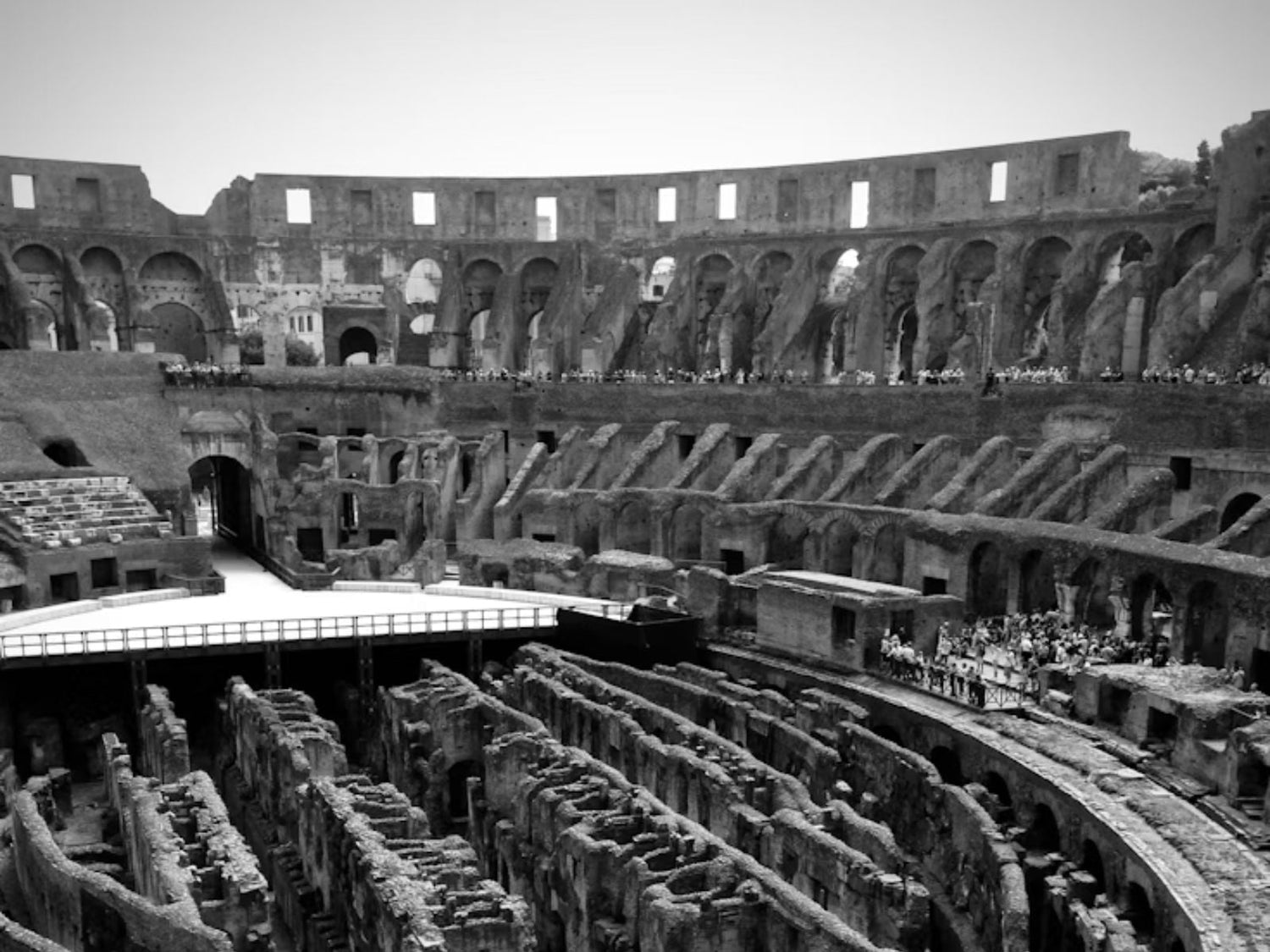
The Hypogeum (Underground): Beneath the arena floor lay a complex network of tunnels with 80 vertical shafts and pulley-operated elevators. Lions, bears, and gladiators would "magically" appear through trap doors on the arena floor.
Worth Knowing: The underground Hypogeum is accessible only with specialized tickets. Standard admission doesn't include this area. Discover our two underground experiences: Colosseum Underground & Ancient Rome Tour or the Small Group Underground Guided Tour →
What happened at the Colosseum? Gladiator battles, animal hunts & ancient games


The Colosseum hosted far more than gladiator battles. A typical day followed a strict schedule:
Morning - Animal Hunts (Venationes): Thousands of exotic animals were imported from across the Empire—lions, elephants, tigers, giraffes, and crocodiles. During the 100-day inaugural games in 80 AD, over 9,000 animals were killed.
Midday - Public Executions: Convicted criminals faced public execution between morning and afternoon events.
Afternoon - Gladiator Combat: The main event featured trained fighters in different styles—heavily armored Murmillos, net-wielding Retiarii, and others. Contrary to popular belief, most fights didn't end in death. Gladiators were expensive investments, and skilled fighters often survived multiple battles.
Naumachia (Naval Battles): The arena floor could be flooded for reenactments of famous naval battles. These spectacular events were rare due to their enormous cost, but demonstrated the absolute power of the Roman Empire.
How was the Colosseum destroyed? The decline of Rome's arena
The end of the games
As Christianity became Rome's official religion, attitudes toward the games shifted. Gladiatorial combat was banned in 404 AD, with the last animal hunts recorded in 523 AD.
A thousand years of pillaging
The abandoned Colosseum became a fortress, cemetery, and—most destructively—a stone quarry. Marble facades were stripped for noble palaces, 300 tons of iron clamps were melted down, and travertine blocks were hauled away to build landmarks including St. Peter's Basilica.
The 1349 earthquake collapsed the entire southern wall. What remains today is about one-third of the original structure.
Ironically, the Catholic Church saved the Colosseum. In the 1700s, Pope Benedict XIV declared it a sacred Christian martyrdom site, finally protecting it from further destruction.
The Colosseum today: what you can see in 2026

Recent restoration
Extensive restoration over the past 15 years has opened previously inaccessible areas:
- Underground Hypogeum chambers (where gladiators prepared)
- Upper tier access (highest seating levels)
- Partial arena floor reconstruction
- Complete exterior cleaning
Today, over 7.6 million people visit annually, making it one of the world's most popular monuments and a UNESCO World Heritage Site.
Insider Tip: Standard tickets give you the main levels, but the underground and upper tiers reveal the real stories. See the Full Experience ticket →
5 fascinating facts about the Colosseum's history
1. Free entry, strict social hierarchy
Entry was completely free for Roman citizens, but seating showed your status. Senators sat front row, while women and the poor stood at the very top. The higher you were, the lower the status, and the closer you were to the arena, the higher the status.
2. Ancient assigned seating
Romans received pottery shards (tesserae) with their section, row, and seat number—ancient tickets. The 80 entrance arches could empty all 50,000+ spectators in under 15 minutes, faster than many modern stadiums.
3. It was originally colorful
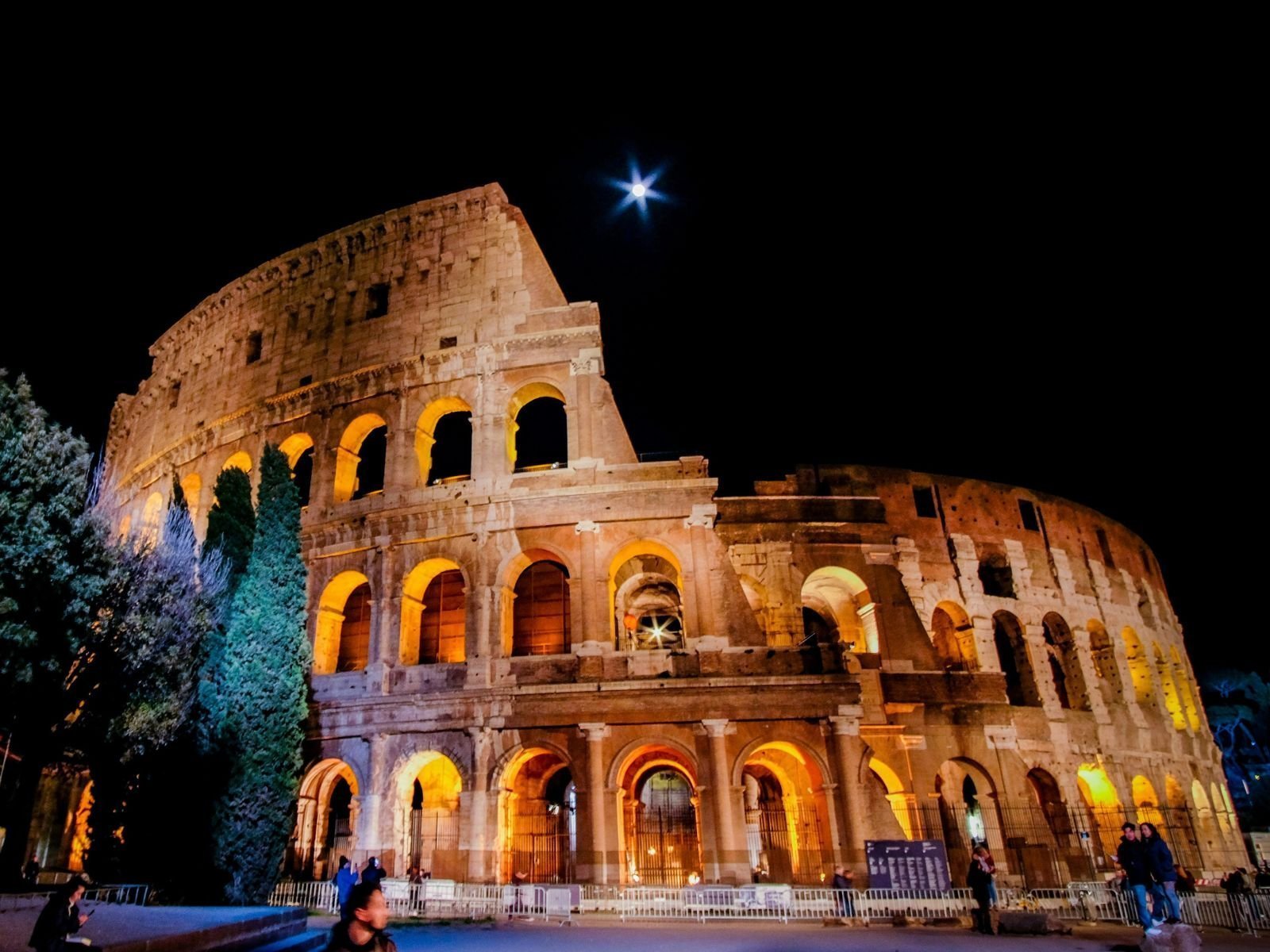
Today we see weathered stone, but the original Colosseum blazed with red and black painted columns, white marble statues in every arch, colored awnings, and gilded bronze decorations.
4. The death gate
Dead gladiators were carried through the Porta Libitinaria (named after the goddess of death) on the western side. Winners exited through the Porta Triumphalis — two gates, two destinies. You can enter through this same gate with a priority access ticket →
5. Still teaching engineers
Modern stadium architects still study the Colosseum's elliptical shape, tiered seating, efficient crowd flow, and modular construction. It influenced everything from Yankee Stadium to contemporary arenas worldwide.
Planning your visit to the Colosseum
Understanding the history transforms your visit from sightseeing to time travel. When planning, consider a guided experience — knowledgeable guides reveal hidden details most visitors miss.
Most Booked in Rome
Skip the queue — go straight to the arena floor
The highest-rated Colosseum entrance ticket — 4.2 stars by thousands of travellers. Skip the queue, step straight onto the arena floor where gladiators once fought, and explore at your own pace with an included audio guide.
Includes Roman Forum & Palatine Hill · Audio guide included · At your own pace
Frequently asked questions about Colosseum history
When was the Colosseum built?
The Colosseum was built between 72-80 AD under emperors Vespasian and Titus. Construction took approximately 8 years with 60,000-100,000 workers.
What happened at the Colosseum in ancient Rome?
The Colosseum hosted gladiator battles, exotic animal hunts, public executions, and naval battle reenactments. The inaugural games in 80 AD lasted 100 days and killed over 9,000 animals, entertaining up to 80,000 spectators.
Can you visit the underground Colosseum?
Yes, but only with specialized tickets. Standard admission doesn't include the Hypogeum chambers where gladiators and animals waited before entering the arena. We offer two options: the Colosseum Underground & Ancient Rome Tour, or the more intimate Small Group Underground Guided Tour →
Ready to visit?
Now that you know the full story, the best way to experience it is with a licensed guide who brings every stone to life. From the gladiators' entrance to the underground tunnels, a guided tour turns a sightseeing visit into something you'll never forget.
Book our guided Colosseum tour →
The Colosseum isn't just a monument—it's a testament to human ambition, genius, and resilience across 2,000 years.

Leave a comment
This site is protected by hCaptcha and the hCaptcha Privacy Policy and Terms of Service apply.