


Everything you need to know before visiting the Pantheon in Rome — from its history and location to tickets, opening hours, and what to see inside.
5 min read
The Pantheon in Rome is one of the most extraordinary monuments in Italy and one of the best-preserved buildings from Ancient Rome. Famous for its giant dome, central oculus, and nearly 2,000 years of history, it remains an essential stop for first-time visitors and repeat travelers alike.
This guide answers the questions people search most: what is the Pantheon in Rome, who built it, how old it is, where it is located, and whether you need tickets before you go.

What is the Pantheon in Rome?
The Pantheon is an ancient Roman temple that was later converted into a Catholic church. It is widely considered the best-preserved monument of Ancient Rome and one of the city's most impressive architectural masterpieces.
The word “Pantheon” is often understood to mean “all gods,” and the building is traditionally associated with Roman religious worship. Today, it is both an active church and a major historic attraction in Rome.
Where is the Pantheon located in Rome?
The Pantheon is located in Piazza della Rotonda, right in the historic center of Rome. It is a short walk from some of the city’s most famous sights, including Piazza Navona, the Trevi Fountain, and Campo de’ Fiori.
Because of its central position, the Pantheon is very easy to include in a walking itinerary through Rome’s historic core.

Who built the Pantheon in Rome?
The original Pantheon was commissioned by Marcus Agrippa around 27–25 BCE. However, the building that stands today was rebuilt during the reign of Emperor Hadrian in the 2nd century AD after the earlier structure was destroyed.
One of the Pantheon’s most famous details is the inscription on the facade, which still credits Agrippa. This is why many visitors are surprised to learn that the present monument is usually linked to Hadrian’s rebuilding.
When was the Pantheon in Rome built?
The first Pantheon was built in the late 1st century BCE. The current Pantheon was constructed around 118–128 AD, which is the version visitors see today.
So while the site itself is more than 2,000 years old, the standing building dates from the early Roman Empire.
How old is the Pantheon in Rome?
The current Pantheon is nearly 1,900 years old. Its survival is one of the reasons it is considered one of the most remarkable engineering achievements of the ancient world.
Unlike many Roman monuments, the Pantheon remained in continuous use, which helped preserve it across the centuries.
What was the Roman Pantheon used for?
The Pantheon was originally built as a Roman temple. In 609 AD, it was converted into a Christian church, officially known as Santa Maria ad Martyres.
This religious transformation played a major role in its preservation. Today, it remains both a functioning church and a monument open to visitors.
What to see inside the Pantheon

The Dome
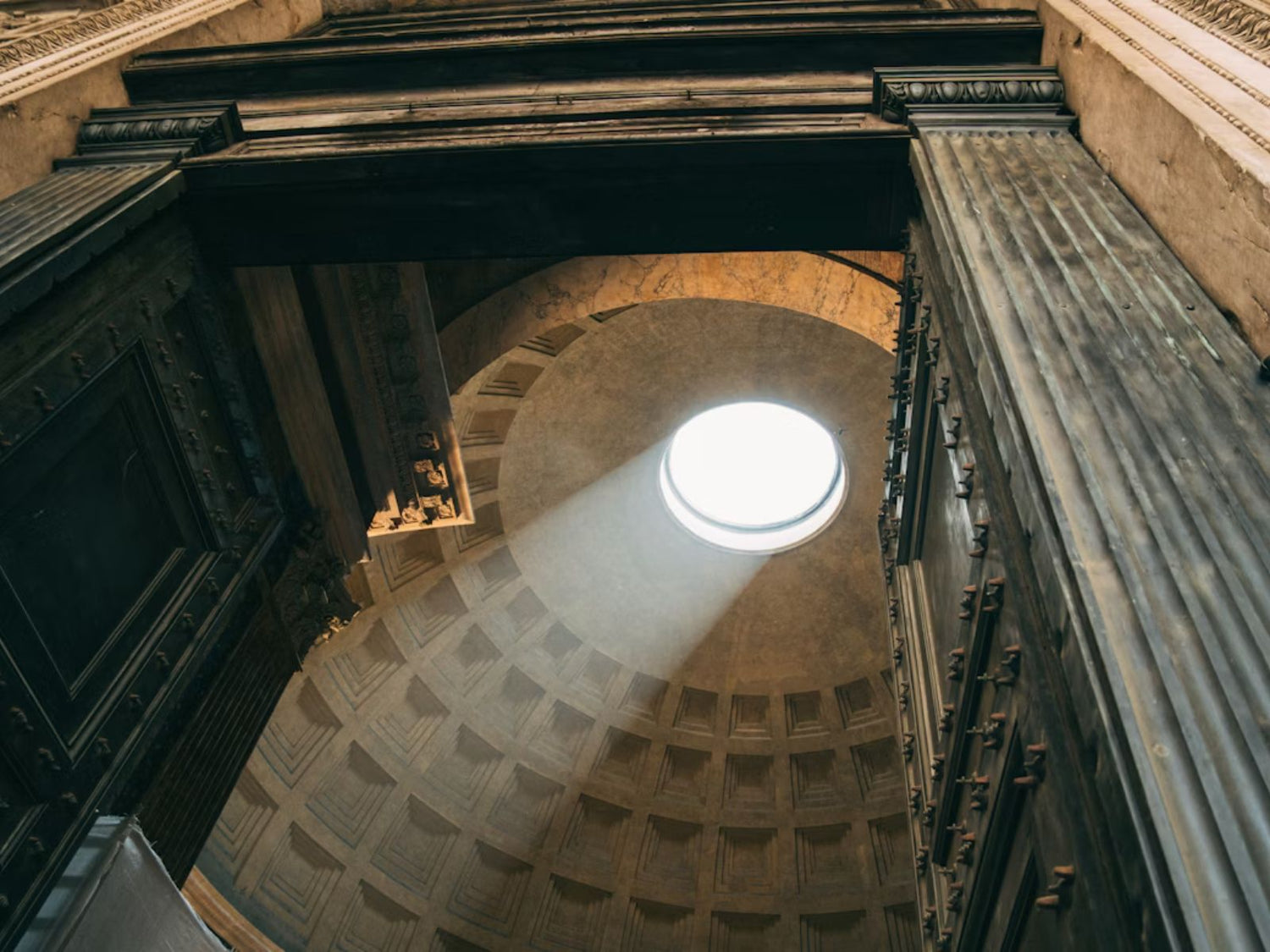
The Pantheon’s dome is its most famous feature and remains one of the greatest achievements of Roman engineering. Its scale and perfect proportions still leave visitors speechless.
The Oculus
At the center of the dome is the oculus, a circular opening that lets in natural light and creates the Pantheon’s unforgettable atmosphere.
The Tombs
The Pantheon also contains important tombs, including that of the artist Raphael and members of the Italian royal family.
The Marble Interior
The richly decorated marble walls and floor show how grand Roman interiors could be and help explain why the Pantheon remains so admired today.
Do you need tickets for the Pantheon in Rome?
Yes, most visitors now need a ticket to enter the Pantheon. Booking ahead is recommended, especially in busy travel periods and on weekends.
✨ Ready to visit the Pantheon?
Explore the full selection of the best-rated Pantheon experiences — from self-guided audioguide entry to a richer guided tour — and choose the one that matches your trip best.
See the handpicked curated List →Pantheon Rome opening hours & best time to visit
The Pantheon is usually open daily, but hours can change around holidays, special events, and religious celebrations. Always check the latest schedule before visiting.
For the best experience, go early in the morning or later in the afternoon. Midday tends to be the busiest period, especially during spring and summer.
Beyond the Pantheon
If you want a deeper experience, look for special visits and cultural routes connected to the Pantheon and the spaces around it. These can add valuable historical context beyond a standard visit.
Here is a complete list of tours and things not to miss in Rome ;)
5 practical tips before visiting the Pantheon
Go early for a calmer experience
The Pantheon is most enjoyable when it is less crowded. Early morning is usually the best time to appreciate the dome and interior in peace.
Look up as soon as you enter
The first sight of the dome and oculus is the highlight for many visitors. Pause for a moment at the entrance before moving deeper inside.
Dress respectfully
Because the Pantheon is still a church, modest clothing is recommended during your visit.
Pair it with nearby sights
The Pantheon fits perfectly into a central Rome walking route with Piazza Navona, the Trevi Fountain, and Campo de’ Fiori.
Book tickets in advance when possible
Even for a short visit, having your Pantheon ticket sorted ahead of time makes the experience easier and more predictable.
FAQ: Pantheon Rome
What is the Pantheon in Rome?
The Pantheon is an ancient Roman temple later converted into a church. It is one of the best-preserved monuments in Rome.
How old is the Pantheon in Rome?
The present Pantheon is nearly 1,900 years old and dates to the 2nd century AD.
Who built the Pantheon in Rome?
The original Pantheon was commissioned by Marcus Agrippa, while the current structure is generally attributed to Emperor Hadrian.
Where is the Pantheon located in Rome?
The Pantheon is located in Piazza della Rotonda in the historic center of Rome.
Do you need tickets for the Pantheon in Rome?
Yes, most visitors need a ticket to enter, and booking in advance is recommended.

Dejar un comentario
Este sitio está protegido por hCaptcha y se aplican la Política de privacidad de hCaptcha y los Términos del servicio.